Most dental problems do not begin with severe pain. They often start quietly — a small area of decay, early gum inflammation, tartar below the gumline, or a crack that you cannot see yourself.
That is why regular dental check-ups are important. A routine visit gives your dentist a chance to find small problems before they become bigger, more uncomfortable, and often more expensive to treat.
If you usually wait until a tooth hurts before booking an appointment, it can feel as though skipping check-ups saves money. In reality, preventive dental care is often the simpler and more economical route because early treatment usually involves less work than repairing advanced damage.
Why Dental Check-Ups Are Important
The biggest value of a dental check-up is not what the dentist does when something is wrong. It is what the dentist may prevent from becoming wrong.
A small cavity found early may need a simple filling. If that decay progresses deep into the tooth, treatment may become more complex and could involve root canal treatment, a crown, or even extraction. The same principle applies to gum disease: early inflammation is much easier to manage than advanced disease that has already damaged the supporting bone.
Routine visits also give your dentist a baseline. When they have seen your mouth regularly, subtle changes are easier to notice. That can make decisions more precise and reduce the chance that treatment is delayed until symptoms become obvious.
Think of a check-up less as paying to be told that everything is fine, and more as paying for the opportunity to keep it that way.
The Real Cost of Skipping Check-Ups
Cost is one of the main reasons people postpone dental visits, especially when nothing hurts. But the comparison should not be ‘check-up versus doing nothing today.’ The more useful comparison is ‘early care versus the treatment that may be needed if a problem progresses.’
| Caught Early at a Check-Up | If Left Until It Hurts |
|---|---|
| Routine check-up and professional cleaning | Treatment for heavier tartar buildup or gum disease |
| Small filling for early decay | Root canal treatment plus a crown if decay reaches the nerve |
| Early gum-disease management | Deep periodontal treatment and, in severe cases, risk of tooth loss |
| Monitoring an early crack, bite issue, or wisdom tooth | Emergency treatment if pain, infection, or breakage develops |
| One short preventive visit | Potentially multiple appointments, more treatment, and higher overall cost |
The exact cost depends on the problem and the treatment needed, so it would be misleading to attach one universal rupee figure to this table. The principle is what matters: earlier problems are usually less complicated to manage than advanced ones.
A routine dental visit cannot guarantee that you will never need major treatment. It can, however, improve the chance that developing problems are identified before they become emergencies.
Key Benefits of Regular Dental Check-Ups
Early Detection of Cavities and Gum Problems
Cavities and gum disease can develop without obvious pain. During an examination, your dentist checks for early decay, bleeding or inflamed gums, gum pockets, worn teeth, cracks, loose restorations, and other changes that may not be visible to you.
Catching these problems earlier usually means there are more conservative treatment options available.
Professional Cleaning
Brushing and flossing are essential, but they cannot remove hardened tartar once it has formed. Professional scaling removes plaque and tartar from areas your toothbrush cannot clean effectively.
Cleveland Clinic notes that routine professional cleanings generally involve scaling and cleaning and that many people are advised to have them about twice a year, although individual needs vary.
Oral Cancer Screening
A dental check-up is not only about teeth. Dentists also look at the tongue, cheeks, gums, lips, palate, and other soft tissues for unusual changes.
They may also feel around the jaw and neck for lumps or enlarged lymph nodes. This is one reason your dentist may examine areas that seem unrelated to a tooth problem. Cleveland Clinic describes visual examination and palpation of the face, neck, and jaw as common parts of oral cancer screening.
A Broader View of Your Oral Health
Your mouth can reflect changes in your general health and habits. Dry mouth, medication use, smoking or tobacco exposure, diet, diabetes, pregnancy, stress-related grinding, and other factors can influence oral health.
A regular check-up gives you an opportunity to discuss these changes and adjust your preventive plan rather than treating every dental problem in isolation.
Personalised Advice
Generic advice such as ‘brush twice a day’ is useful, but it cannot tell you which area you consistently miss, whether your brushing is too aggressive, whether you need interdental cleaning, or whether your bite is wearing certain teeth.
A dentist or hygienist can tailor advice to what they actually see in your mouth. That makes preventive care more practical and easier to follow.
How Often Should You Visit the Dentist?
For many people, a dental check-up and cleaning every six months is a common starting point. But the right dental check-up frequency is not identical for everyone.
Some people can safely go longer between visits, while others benefit from more frequent monitoring. Your dentist may recommend shorter intervals if your risk of decay or gum disease is higher.
You may need more frequent visits if you:
- Have a history of gum disease or recurrent cavities
- Smoke or use tobacco
- Have diabetes or another condition that affects oral health
- Are pregnant and experiencing gum changes
- Wear braces, aligners, dentures, or complex dental restorations
- Have dry mouth or take medicines that reduce saliva
- Are a child or teenager with changing dental needs
The useful answer is therefore not ‘everyone must go exactly every six months.’ It is: start with regular preventive visits and let your dentist set the interval according to your risk.
What Happens During a Dental Check-Up?
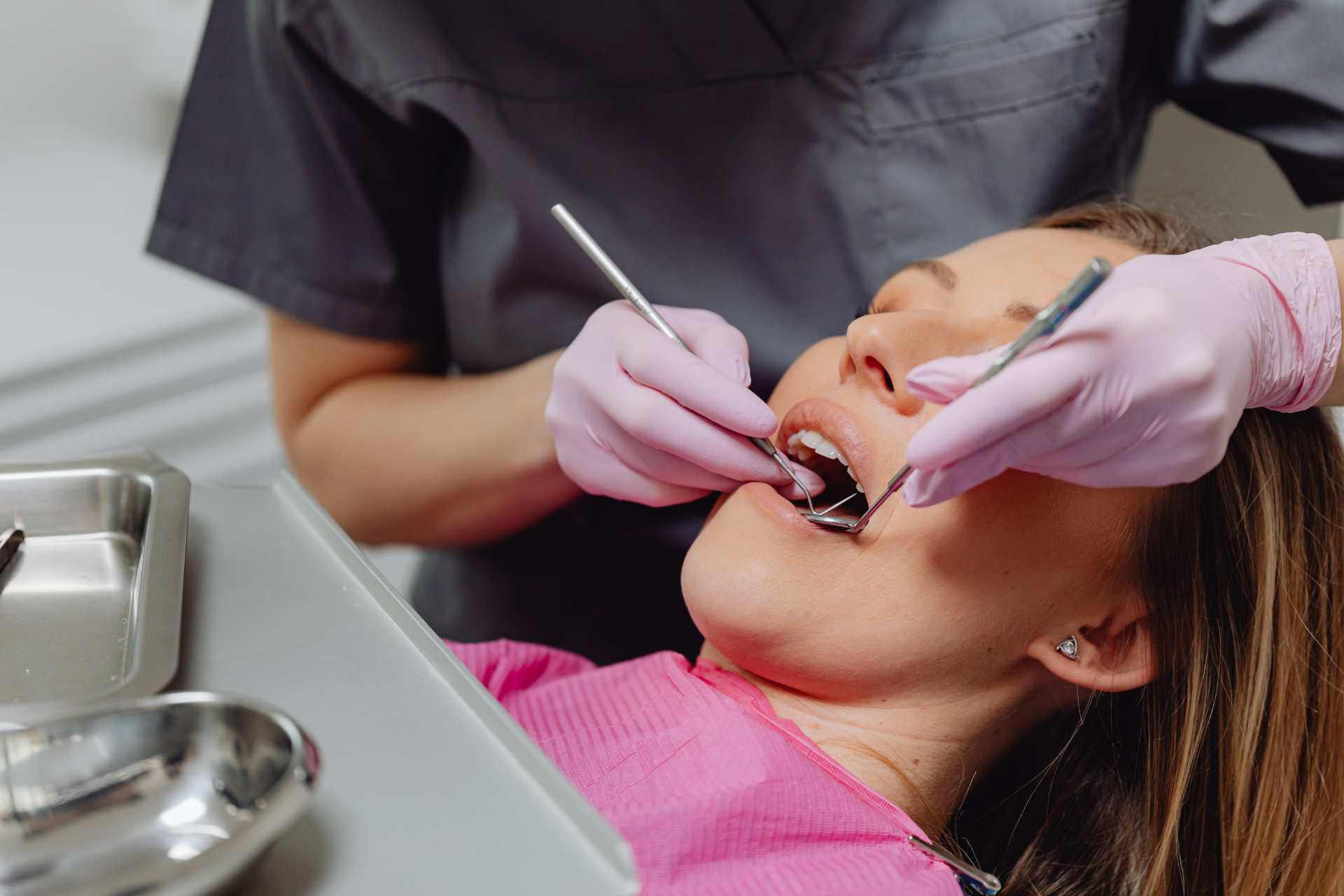
If you have not visited a dentist for a while, knowing what to expect can make the appointment feel much more straightforward. A routine visit usually follows a simple sequence.
- Dental examination: The dentist checks your teeth, existing fillings or crowns, gums, bite, and soft tissues. They look for decay, cracks, wear, gum inflammation, and other changes.
- X-rays if needed: Dental X-rays are not automatically required at every appointment. They are used when the dentist needs information that cannot be seen directly, such as decay between teeth, bone levels, impacted teeth, or problems around roots.
- Professional cleaning: If appropriate, plaque and hardened tartar are removed through scaling. The teeth may then be polished to remove residual surface deposits and stains.
- Oral soft-tissue and cancer check: The dentist examines areas such as the tongue, cheeks, gums, lips, palate, and throat region. They may also feel the jaw and neck for unusual lumps or tenderness.
- Personalised advice and next steps: You receive an explanation of what was found, advice on home care, and a treatment plan only if something needs attention. If everything is healthy, the next step may simply be another preventive visit at the interval recommended for you.
A routine check-up is usually much less dramatic than people imagine. The goal is to assess, prevent, clean where needed, and give you a clear picture of your oral health.
Signs You Should See a Dentist Sooner
Regular appointments are useful, but you should not wait for your next scheduled check-up if something changes.
Book an earlier dental assessment if you notice:
- Toothache or pain when biting
- Swelling of the gums, face, or jaw
- Bleeding gums that persist or worsen
- A broken, cracked, or loose tooth
- A filling, crown, or dental restoration that has come loose
- Persistent sensitivity to hot, cold, or sweet foods
- A mouth ulcer, red or white patch, or unusual lump that does not heal
- Bad breath or a bad taste that persists despite good oral hygiene
- Difficulty opening your mouth, chewing, or swallowing
These signs do not automatically mean something serious is wrong, but they are worth checking rather than waiting for them to become more uncomfortable.
Book Your Check-Up at Pradhan Dental Centre
At Pradhan Dental Centre, a preventive visit is designed to give you clarity about your oral health before treatment becomes urgent. A routine assessment can include an examination of the teeth and gums, professional cleaning where appropriate, and personalised advice based on what your dentist finds.
If X-rays or further treatment are needed, the reason can be explained before you proceed. Just as importantly, not every check-up ends with a treatment recommendation. Sometimes the best outcome is simply confirmation that your mouth is healthy and a plan to keep it that way.
If it has been a while since your last dental visit, book a consultation for a routine check-up at Pradhan Dental Centre. Preventive care is a small step that can make future dental decisions simpler, calmer, and often less costly.
Frequently Asked Questions
What happens during a dental check-up?
A dentist examines your teeth, gums, bite, and soft tissues, checks existing dental work, and may recommend X-rays if they are clinically needed. A routine visit may also include professional scaling and polishing plus personalised home-care advice.
How long does a dental check-up take?
The length depends on whether you need X-rays, cleaning, or further assessment. A straightforward examination may be brief, while a visit that includes a professional cleaning commonly takes longer; Cleveland Clinic notes that dental cleanings often take around 30 to 60 minutes.
Why are dental check-ups important if nothing hurts?
Many cavities and early gum problems cause little or no pain at first. Regular check-ups allow a dentist to find changes earlier, when treatment may be simpler and less costly than waiting for pain or infection.
What does a dental check-up cost?
The cost varies by clinic and by what the appointment includes, such as X-rays or cleaning. Ask the clinic what is included in the quoted check-up fee before your visit; this article does not use unconfirmed pricing.
Are dental X-rays necessary at every check-up?
No. X-rays are taken according to your history, symptoms, age, risk, and what the dentist finds during the examination. They are useful when the dentist needs to see areas that cannot be examined directly.
Why does the dentist check your neck?
Dentists may feel your jaw and neck as part of a head-and-neck or oral cancer screening to check for unusual lumps, swelling, or lymph nodes. It is a routine preventive step rather than a sign that the dentist suspects a serious problem.
Is every six months the right frequency for everyone?
Six-monthly visits are a common preventive schedule, but frequency should be personalised. People with gum disease, frequent cavities, tobacco use, dry mouth, certain medical conditions, or complex dental work may need more frequent monitoring.
The Bottom Line
Regular dental check-ups are valuable because they shift dentistry from reacting to pain toward preventing problems and finding them earlier. That can mean healthier teeth and gums, fewer surprises, and in many cases less complicated treatment.
If the main reason you postpone a visit is cost, remember that the most expensive dental problem is often the one that had time to progress unnoticed. Prevention does not remove every risk, but it gives you a better chance to act while your options are still simple.
A routine check-up is not about looking for treatment. It is about protecting the health you already have.