Most people think dental implants are all the same. They are not.
What actually affects how well an implant settles, heals, and stays stable is something you cannot see from the outside — the design of the implant inside your jawbone.
If you have come across the term active vs passive dental implants, you may be wondering one simple thing: Which one is right for me?
The honest answer is: it depends on your bone, your bite, and your treatment plan. One design is not automatically better than the other. The right implant is the one that suits your mouth.
|
Simple takeaway: active implants grip the bone more firmly at the start. Passive implants settle in more gently and rely on natural healing over time. |
What Does “Active vs Passive Dental Implants” Mean?
These terms describe how the implant threads interact with your jawbone when the implant is placed.
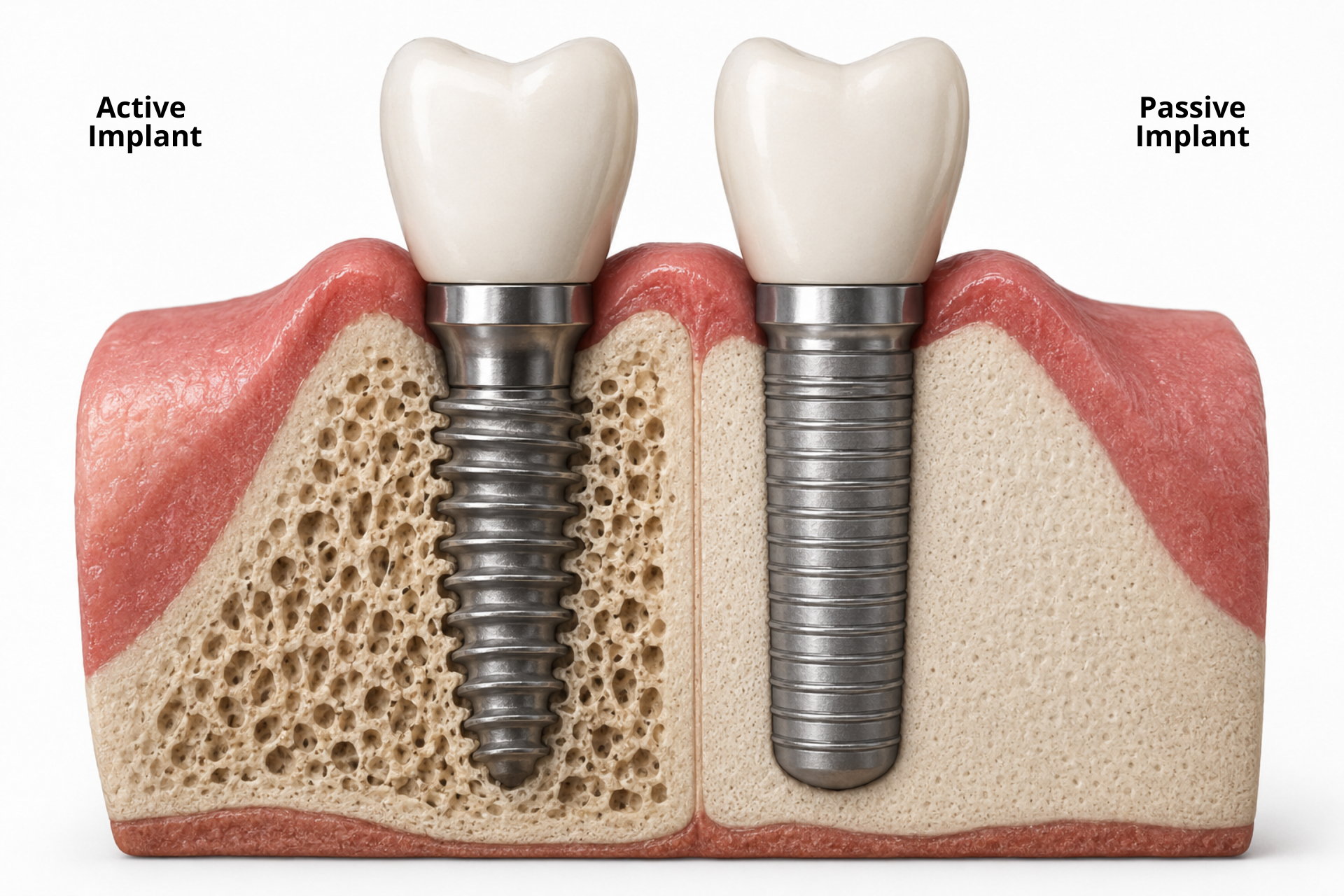
Think of implant threads like the grooves on a screw. Some are deeper and sharper, so they grip more strongly. Others are smoother and less aggressive, so they fit into the prepared space with less pressure.
This matters because your jawbone is not the same everywhere. The upper jaw is often softer. The lower jaw is often denser. Some people also have lower bone density because of age, previous infection, long-term missing teeth, or bone loss.
So, the choice between active and passive dental implants is not about picking the newest or most expensive option. It is about matching the implant design to the bone.
What Are Active Dental Implants?
Active dental implants are designed to grip the bone firmly from the moment they are placed.
They usually have deeper, sharper threads. These threads help the implant hold more tightly in the bone at the beginning of treatment. Dentists call this early hold primary stability.
Here is an easy way to picture it: an active implant works a little like a self-drilling screw. It does not simply sit in a space. It creates a strong grip as it goes in.
This can be useful when the bone is softer and needs more support from the implant design itself.
When Are Active Implants Usually Preferred?
- Softer bone, especially in the upper jaw
- Immediate implant placement in suitable cases
- Teeth-in-a-day or early loading plans
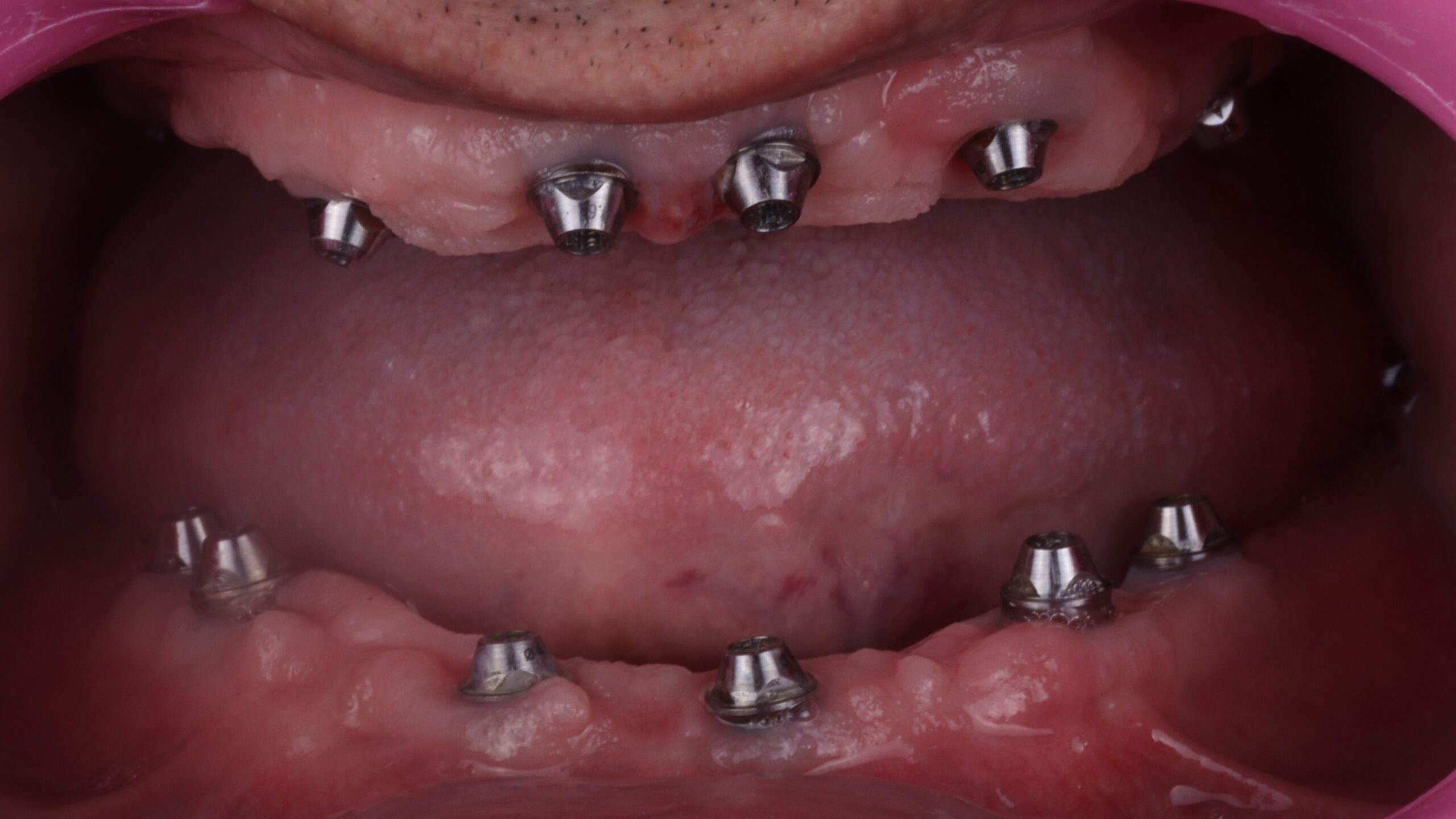
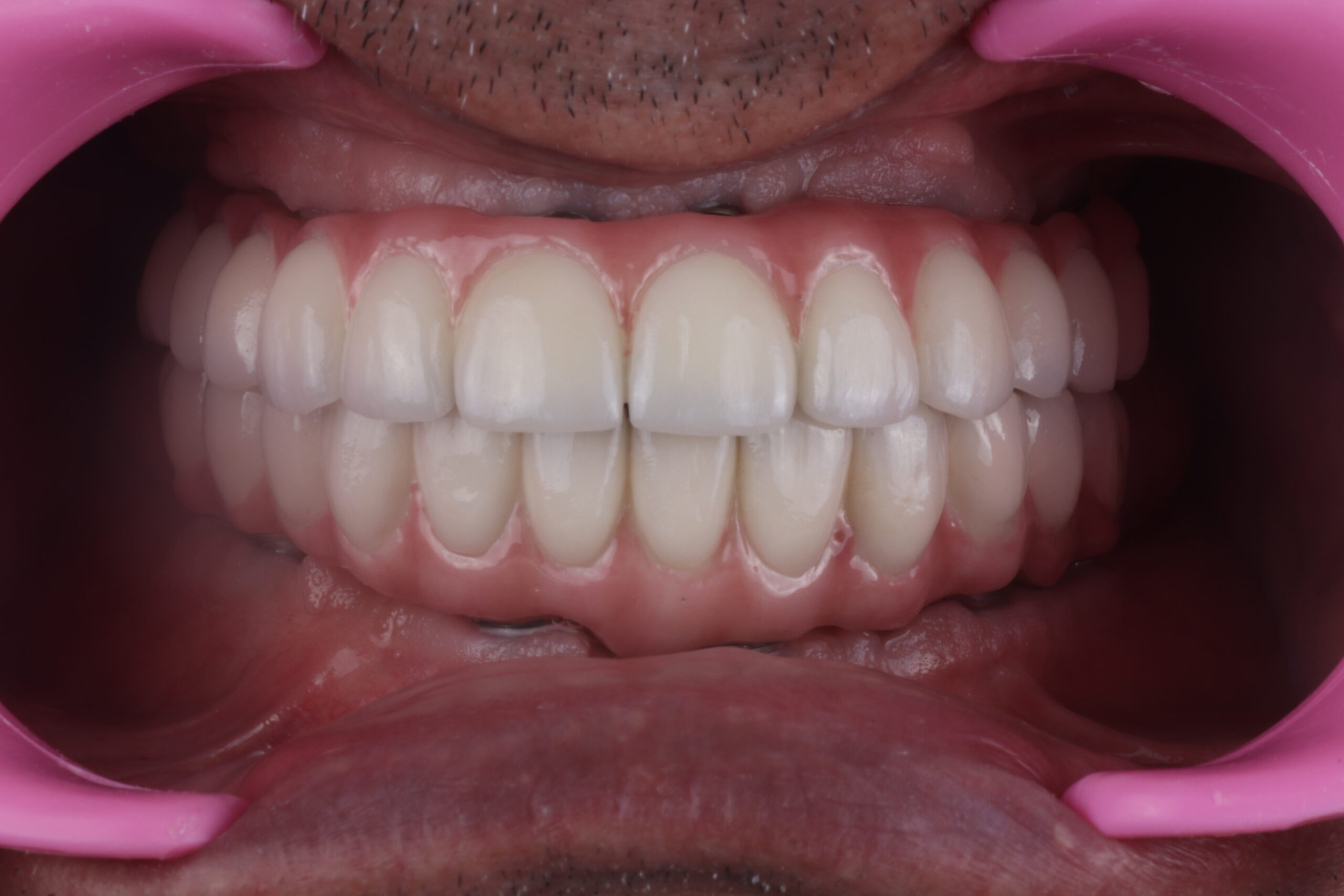
- Full-mouth rehabilitation
- Cases where strong early stability is important
This does not mean active implants are always better. It simply means they may be helpful when the bone needs a stronger starting grip.
What Are Passive Dental Implants?
Passive dental implants are designed to fit into the prepared bone site in a more controlled way.
The threads are usually smoother and less aggressive. Instead of compressing the bone strongly, they allow the implant to sit in place and let the bone gradually bond with it.
This natural bonding process is called osseointegration. In simple terms, it means your bone grows close to the implant surface and holds it over time.
Imagine placing a bolt into a carefully prepared hole. It fits well from the start, but the long-term strength builds as everything settles and bonds.
When Are Passive Implants Usually Preferred?
- Dense bone, especially in the lower jaw
- Traditional staged implant procedures
- Cases where too much pressure on the bone should be avoided
- Situations where slow, steady healing is the priority
Passive implants are not weaker. They are simply designed for a different type of bone and a different healing approach.
Key Differences: Active vs Passive Dental Implants
| Feature | Active Dental Implants | Passive Dental Implants |
|---|---|---|
| Thread design | Deeper, sharper threads | Smoother, rounded threads |
| Starting grip | Stronger immediate hold | More gradual stability |
| Bone pressure | More compression | Gentler fit |
| Healing style | Useful when early stability matters | Useful when controlled healing matters |
| Often suited for | Softer bone | Denser bone |
| Common use | Immediate implants, full-mouth rehab | Staged implant treatment |
In simple terms: active implants focus on grip first. Passive implants focus on a gentler fit and gradual bone bonding.
Bone Density: The Real Deciding Factor
Bone density is one of the biggest reasons your dentist may choose one implant design over another.
If your bone is soft, the implant may need extra help to stay stable at the beginning. In this situation, an active implant may be considered because it can create a stronger initial grip.
If your bone is dense, the concern is different. The issue may not be lack of grip. It may be too much pressure. In that case, a passive implant may be preferred because it places less stress on the surrounding bone.
For patients considering dental implants in Mumbai, this is why a proper consultation and scan matter. Two people may both need an implant, but their bone quality can be completely different.
The best implant is not the one with the strongest marketing. It is the one that suits your bone type.
Which Implant Is Better for Low Bone Density?
If you have been told you have low bone density, you may be worried that implants will not work for you.
In many cases, active dental implants may be useful in softer bone because they can provide better early stability. This is especially relevant in areas where the bone is naturally less dense, such as parts of the upper jaw.
But low bone density does not automatically mean you need only one type of implant. Your dentist may also look at bone volume, gum health, bite pressure, the position of the missing tooth, and whether bone grafting is needed.
That is why the decision should be made after a scan, not after reading a product description online.
Pros and Cons Comparison
| Feature | Active Dental Implants | Passive Dental Implants |
|---|---|---|
| Main advantage | Strong early stability | Controlled fit in dense bone |
| Main limitation | May create more pressure in dense bone | May not grip as strongly in soft bone |
| Healing | Can support faster early loading in suitable cases | Supports steady, traditional healing |
| Ideal bone type | Softer bone | Denser bone |
| Best use case | Immediate implants and full-mouth rehabilitation | Standard staged implant treatment |
Why the Surgeon’s Expertise Matters More Than the Implant Type
This is where experience makes the biggest difference.
A patient may ask, “Which implant is best?” But a skilled implant dentist is asking a deeper question: “Which implant is best for this bone, this bite, and this final tooth?”
At Pradhan Dental Centre, implant planning is not based on guesswork. Digital 3D planning helps assess bone height, width, density, and the angle in which the implant should be placed.
This helps the team choose an implant that supports both healing and the final crown or bridge. The aim is not just to place an implant. The aim is to restore a tooth in a way that looks natural, feels stable, and lasts well over time.
This is especially important for complex cases such as full-mouth rehabilitation, long-term missing teeth, low bone density, and patients who have been told they may need bone grafting.
So, Which One Is Right for You?
There is no universal answer.
Both active and passive dental implants can work very well when they are selected correctly and placed with proper planning.
You may be a better candidate for an active implant if your bone is softer or if your case needs stronger early stability. You may be a better candidate for a passive implant if your bone is dense and the goal is a more controlled healing process.
The safest answer comes from a personalised consultation, not a general comparison chart.
FAQs About Active & Passive Dental Implants
What is the difference between active and passive dental implants?
Active implants grip the bone more firmly at placement. Passive implants fit more gently and rely more on gradual bone bonding over time.
Which dental implant is best for low bone density?
Active implants are often considered for softer bone because they can provide stronger early stability. However, the final choice depends on your scan and clinical evaluation.
Are active implants more painful?
No. Implant placement is done under anaesthesia, so the procedure should not be more painful simply because an active implant is used.
Which type lasts longer?
Both can last well when the implant is chosen correctly, placed properly, and maintained with regular dental care. Long-term success depends on planning, hygiene, bite forces, and follow-up visits.
Can I choose which implant I want?
Your dentist will guide this choice based on your bone quality, tooth position, bite, and treatment goal. It is a clinical decision, not just a preference.
Are passive implants weaker?
No. Passive implants are not weaker. They are designed for situations where a gentler fit and controlled healing may be more suitable.
Is one type better for full-mouth rehabilitation?
Active implants are often used in full-mouth rehabilitation when early stability is important, but the best choice depends on the patient’s bone profile and the final restoration plan.